
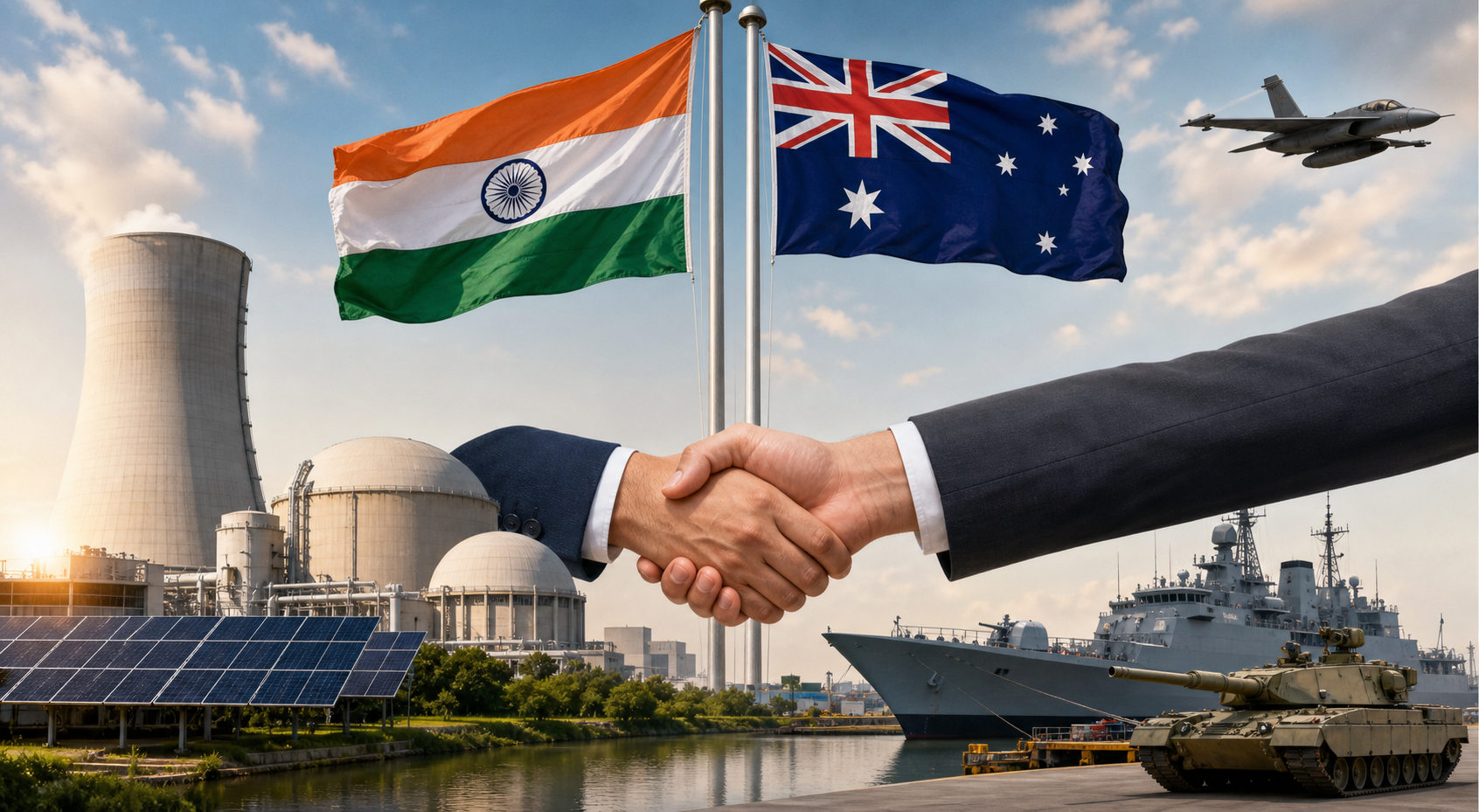
In recent updates during PM Modi’s visit to Australia, significant pacts on nuclear energy and defence were sealed between India and Australia, marking a turning point in their bilateral relations.
Key Takeaways:
- Landmark agreements on nuclear energy and defence were signed between India and Australia.
- Uranium imports from Australia will impact India’s energy strategy and reduce its dependency on fossil fuels.
- Enhanced defence cooperation will strengthen India’s security capabilities and strategic partnerships.
- The pacts will contribute to trade facilitation and infrastructure development timelines in both countries.
Agreement on Nuclear Energy:
The agreement on nuclear energy between India and Australia opens up avenues for uranium imports from Australia. This move is significant for India’s energy strategy as it diversifies its energy sources and reduces the reliance on fossil fuels. It also aligns with India’s goal to increase its share of clean energy in the overall energy mix.
Impact on India’s Energy Strategy:
The import of uranium from Australia will play a crucial role in meeting India’s growing energy demands. It will support the expansion of nuclear power generation in India, contributing to a more sustainable and reliable energy sector.
Defence Pact:
The defence pact between India and Australia signifies a deepening of their security cooperation. The collaboration in defence technologies and intelligence sharing will enhance India’s defence capabilities and bolster its strategic position in the region.
Trade Facilitation and Infrastructure Development:
These pacts are not limited to nuclear energy and defence but extend to broader areas of trade facilitation and infrastructure development. They pave the way for increased economic engagement between India and Australia, leading to mutual benefits and growth opportunities.
In conclusion, the recent agreements between India and Australia on nuclear energy and defence mark a significant milestone in their relationship. These pacts not only strengthen bilateral ties but also have far-reaching implications for India’s energy strategy, security posture, and economic growth prospects.